Secondary Patents: How Drug Companies Extend Monopolies and What It Means for You
When a drug first hits the market, it’s protected by a primary patent, a 20-year legal shield that stops others from making or selling the same medicine. But once that runs out, companies often file secondary patents, new patents on minor changes like dosage forms, delivery methods, or inactive ingredients. These are also known as patent evergreening—a strategy to keep competitors out and prices high long after the original invention has expired.
Secondary patents don’t make drugs better or safer—they just delay cheaper versions. For example, a pill might get a new coating to make it dissolve slower, or a drug might be reformulated into a liquid for kids. These tweaks don’t change how the medicine works, but they can add 5 to 10 more years of exclusivity. That’s why you still pay $300 for a brand-name drug when the active ingredient has been around for decades. The generic drug, the same medicine sold under its chemical name at a fraction of the cost can’t enter the market until every single patent, even the weakest ones, expires.
This system affects real people. If you’re on a statin, a calcium channel blocker, or even an antihistamine, chances are you’ve paid more than you needed to because of a secondary patent. Pharmacists see it every day: patients skipping doses because they can’t afford the brand, while the manufacturer files another patent on the pill’s color or shape. The FDA, the U.S. agency that approves drugs and monitors safety doesn’t evaluate whether these secondary patents are meaningful—only whether they’re technically valid. That’s why bioequivalence studies, like those using partial AUC, a precise method to compare how the body absorbs different versions of a drug, matter so much. They prove generics work just as well, but patents still block them.
What you’ll find below are real-world examples of how secondary patents play out—from how they delay generic versions of common heart meds to how they shape the cost of ADHD drugs, sleep aids, and even erectile dysfunction treatments. You’ll see how companies use patent strategies to protect profits, and how patients and pharmacists navigate the fallout. No theory. No fluff. Just how it works on the ground—and what you can do about it.
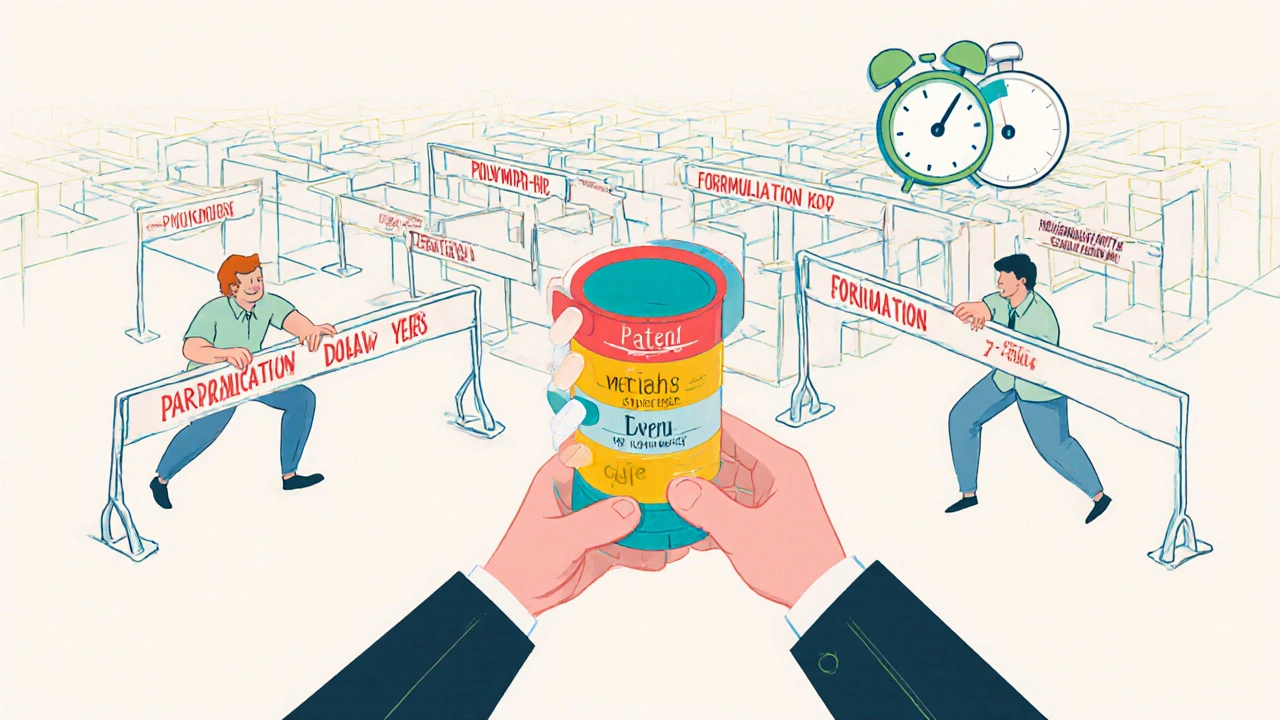
Secondary patents let pharmaceutical companies extend market exclusivity by patenting minor changes to existing drugs, delaying generic competition and keeping prices high. Learn how these patents work, who benefits, and why they’re under growing scrutiny.